 01 / AGENTIC INTELLIGENCE
Intelligence that works together
Agents become coordinated digital teams.
Specialised agents work with shared leadership, communication, responsibilities and measurable goals.

Agents become coordinated teams. Robotics gives intelligence perception and mobility. Tomorrow’s industrial standards may bring us closer to humanlike SYNTHS. We explore how these worlds can converge — through integration, testing and evidence.
 E.V.E. · SYNTAVA SPECIAL ENVOY · DIGITAL PERSONA
Not science fiction. Not empty promises. What happens when organised digital intelligence becomes mobile — and eventually humanlike?
Explore our work →A technological trajectory worth exploring: agents coordinate, robots act, industrial standards advance humanlike capability — and THAL-KI tests what can be integrated today.
01 / AGENTIC INTELLIGENCEAgents become coordinated digital teams.
Specialised agents work with shared leadership, communication, responsibilities and measurable goals.
 02 / EMBODIED INTELLIGENCE
Robots make digital agents mobile.
Sensing, movement and physical interaction extend software intelligence into human-centred spaces.
 03 / FROM HUMANOIDS TO SYNTHS
From humanoid machines towards SYNTHS.
Humanlike facial identity and interaction are explored through E.V.E. as a visual reference; emerging industry-standard robotics and mechatronics may someday extend such interfaces into physical systems.
 04 / THAL-KI IN PRACTICE
Make the possible testable.
We evaluate available technologies, build integrations and document results — without claiming tomorrow’s capabilities already exist.
E.V.E. is a digital SYNTAVA persona and visual identity reference. Humanlike robotics and SYNTHS are research and future directions, not finished THAL-KI products. Illustrations are conceptual.
THAL-KI is an independent Swiss non-profit environment for people who would rather test ambitious technologies than merely talk about them.
Our approach combines engineering curiosity with independent research. We use locally operated computing infrastructure and develop work that can be inspected, challenged and improved.
We are interested in the practical meeting point between AI agents, humanlike robotics, information systems and digital communication — not only in the technologies themselves, but in the processes that make them useful.
The association also has a tradition of exchange across ages and disciplines. That background supports our work but does not replace the technology agenda.
A long-term vision is clearly labelled as such. A prototype is a prototype. A tested result is documented. We seek credible progress rather than promises.
Build intelligence that can cooperate. Bring it into the physical world. Use rigorous research to understand what comes next.

What if AI agents worked like an organisation?
SYNTAVA explores a coordinated architecture of specialised digital workers with roles, leadership, communication and operational controls.
Focus: Integration and verifiable agent operations.

What changes when intelligence can move?
We evaluate humanoid platforms and the potential of embodied agents: perception, mobility, interaction and human-centred applications.
Focus: Evaluation and practical demonstrations — not robot manufacturing.

From Information and Knowledge to “Gain of Action”.
We evaluate sources, connect knowledge across disciplines and translate findings into decisions and practical next steps. Evidence matters when it improves our capacity to act.
Focus: Traceable evidence, decision support and actionable implementation.
Technology is easier to understand when it can be seen and questioned. We turn research, robotics and emerging AI into engaging, multilingual visual narratives.
Concepts, scripts, AI-assisted production, interviews, character-led explainers, editing, localisation and publishing — one coherent workflow, from idea to released video.
 Featuring E.V.E.SYNTAVA Special Envoy · Consistent avatar identity
Define the audience, story, script and evidence behind each video.
Create and edit AI-assisted visuals, narration, avatars and demonstrations.
Prepare language versions, subtitles and cultural adaptations for international viewers.
Distribute via selected video and social platforms, with clear attribution and editorial quality checks.
Our operating principle is simple: an exciting idea earns credibility only through a transparent test.
Define a research question, technology opportunity or learning objective.
Develop prototypes and test them under controlled conditions.
Record what works, what fails, what remains uncertain and what can be repeated.
Share suitable findings, publications and demonstrations with clear attribution.
Advanced technology needs experience, judgement and accountable people. Meet the elected THAL-KI board — and separately, SYNTAVA’s digital Special Envoy.

Strategy, research and entrepreneurship.

Community, networking and ladies’ initiatives.

Technology, AI and infrastructure.

Communication · Research · Digital Media
E.V.E. is SYNTAVA’s recurring digital face for presenting emerging technologies, multilingual storytelling and human–AI interaction. Her visual identity also informs our humanlike robotics concepts. She does not hold an association board position.
Research thrives on independent work; business development and international exchange benefit from a trusted network. We keep these functions distinct.
Swiss Family Office (Novel Ecosystems) Club
Sir John Basu · President
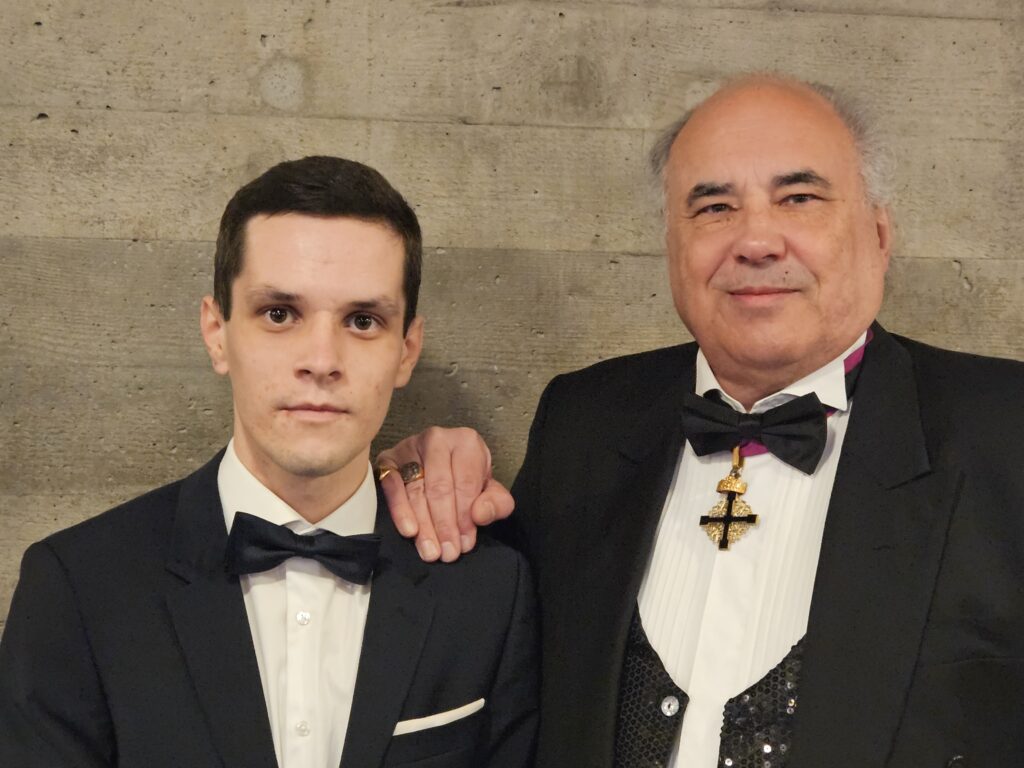
Ritter Georg, Vice-President · Sir John Basu, President
Its role is to connect experienced entrepreneurs and family-office perspectives with emerging economic models and selected opportunities around AI and robotics — separate from the association’s research activities.
Its particular value lies in informed dialogue, identifying promising business models and facilitating appropriate introductions — while research work, financing decisions and contractual responsibilities remain clearly separated.
Business networks · New economic ecosystems · International collaboration
International AI collaboration
Sir John Basu · Professional exchange
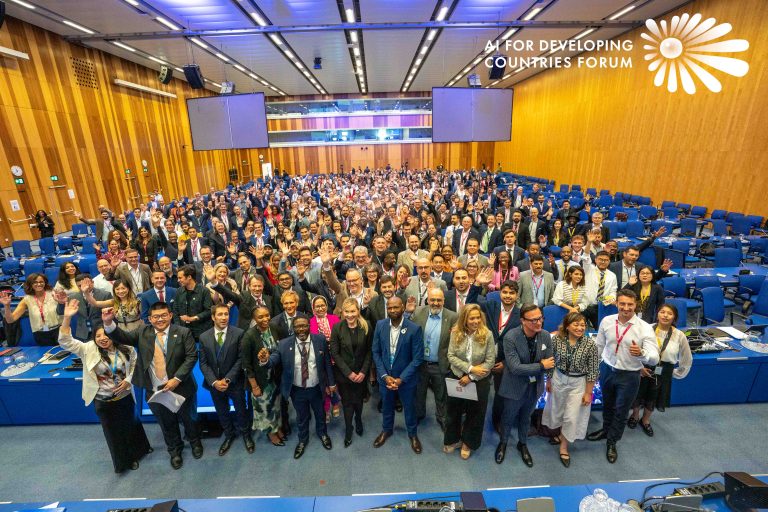
AIFOD event · International professional exchange
Connections with AI for Good, AIFOD and other international communities provide occasional opportunities for dialogue, knowledge sharing and professional exchange.
These relationships are complementary activities, not our central development programme. Participation, roles and affiliations will be described only where they are current and verifiable.
Community exchange · Knowledge sharing · Selected contacts
Published research can be examined at its original sources. The documents below describe research frameworks and hypotheses, not completed autonomous organisms or production-ready systems.
A Dual-Use Framework for Artificial Collective Organisms
John Kalyan Basu · Version 1.0 · 20 September 2026 · Published research framework / preprint
Multi-agent organisation, integrated digital functions and the Smallest Sufficient Autonomous Cube (SSAC). The framework does not claim the creation of digital life or a fully independent organism.
A Falsifiable Framework for Information-Borne Replicators in LLM Systems
John Kalyan Basu · Version 1.0 · 18 September 2026 · Hypothesis / preprint
An independently published, falsifiable hypothesis. No digital bacterium has been demonstrated; THAL-KI observes related external research without making this an active development priority.
We value contact from research organisations, students, technology specialists and prospective project collaborators. A useful introduction explains the topic, objective and expected form of cooperation.
Research field, proposed contribution, relevant experience and preferred next step. We encourage focused cooperation rather than unsolicited marketing.
THAL-KI · Swiss non-profit association
Lakeside Residence
Weidenstrasse 6a · 9422 Thal SG · Switzerland
President · Sir John Basujohn.basu@thal-ki.ch
VP Technology · Manuel Spissmanuel.spiss@thal-ki.eu
VP / Ladies Club · Erna Flirierna@ladyfliri.ch